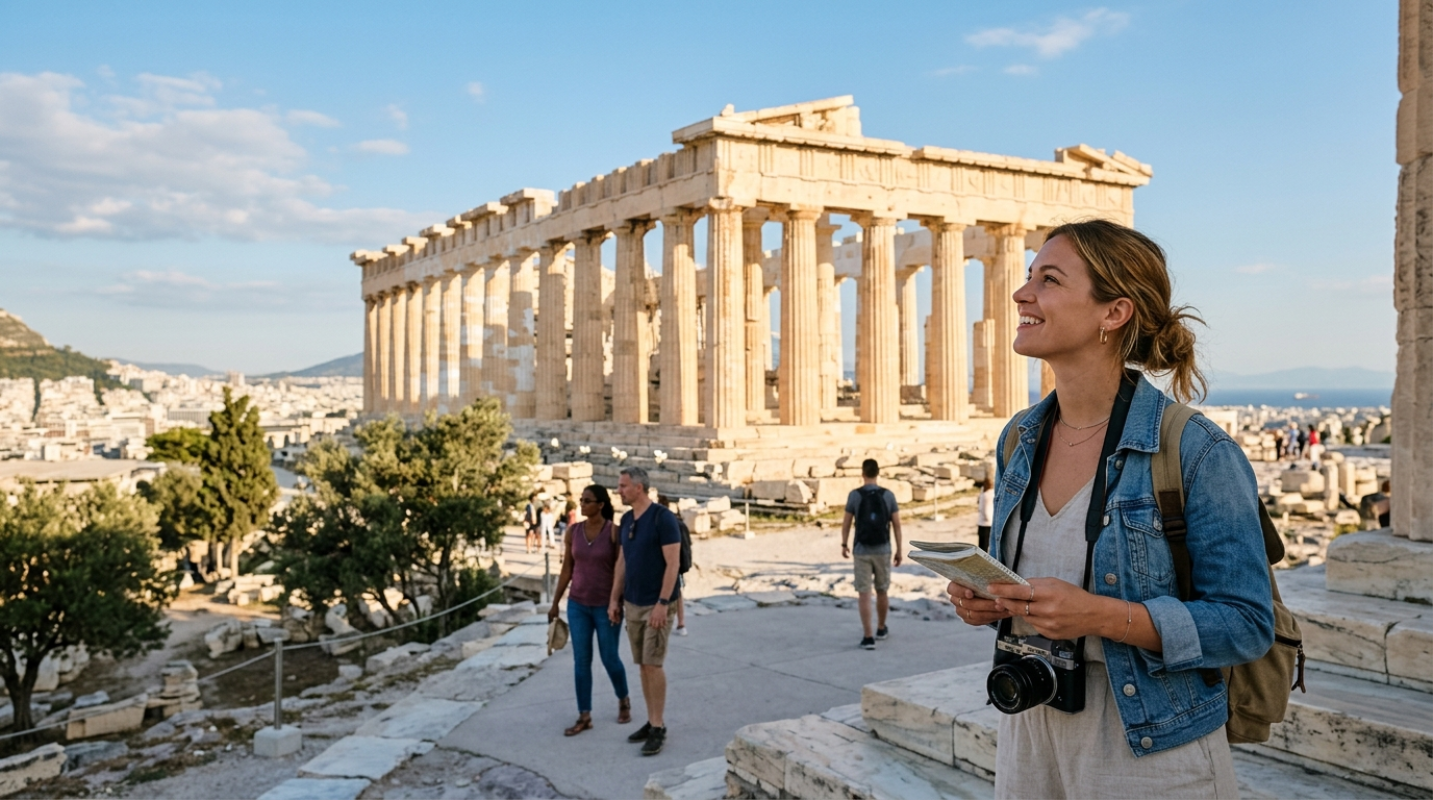
 (Image source: Gemini)
 Remember that frantic era a few years ago when everyone was obsessed with finding the most obscure, "untouched" village in the middle of nowhere? We all wanted to be the first person to post a photo of a place no one could pronounce. It was exhausting. Fast forward to 2026, and the vibe has shifted. You've probably noticed it in your own social feeds or your group chats. People are going back to Paris. They're booking flights to Rome. They're heading to London and Kyoto again. But here's the twist. We aren't going back to these places to do the same old tourist shuffle.
The "revenge travel" chaos of the post-pandemic years has matured into something more thoughtful. We're seeing a return to the heavy hitters of global tourism, but with a completely different mindset. International tourism basically hit 100 percent of its pre-pandemic levels by the end of 2024, with about 1.4 billion people crossing borders.¹ Countries like the UK and Spain saw massive jumps in spending, proving that the classics still have a magnetic pull.
So why are we flocking back to the icons? It's a mix of wanting things to actually work, a deep craving for nostalgia, and a desire to see these famous cities through a much slower, more personal lens. It's the difference between seeing a city as a checklist and seeing it as a living, breathing home for a week.
The Search for Reliability in an Uncertain World
Let's be honest for a second. Have you ever booked a "hidden gem" only to find out the nearest grocery store is a three-mile hike and the Wi-Fi is powered by a hamster on a wheel? There's a certain level of travel anxiety that comes with the unknown. After several years of global instability, many of us are just tired. We want a vacation that actually feels like a vacation.
Classic destinations offer a level of "guaranteed" quality that's hard to beat. When you go to a city like Paris or Tokyo, you know the infrastructure is there. You know the trains run on time, the hotels have high standards, and there's a well-documented path for almost any experience you want. This reliability is a huge relief when you're trying to escape the stress of daily life.
It isn't just about being lazy. It's about efficiency. When the logistics are easy, you have more mental energy to actually enjoy the culture. You aren't wasting four hours trying to figure out a bus schedule in a language you don't speak. In major hubs, the ease of navigation allows you to relax the moment you land. This predictability is why spending in France jumped 27 percent recently compared to 2019 levels.² Travelers are voting with their wallets for places where they know the coffee will be good and the museums will be open.
Rediscovering Classics Through New Lenses
You might think you've "done" Rome because you saw the Colosseum once in 2015. But the way we travel now is less about the monuments and more about the moments. There's a huge move toward "slow travel" in 2026. Instead of trying to see five cities in ten days, people are staying in one place for a week or more. Fora Travel noted that average trip lengths have increased to nearly six days, up from just over five only a year ago.
This shift allows for what some call "niche interest" travel. You aren't just going to Florence. You're going to Florence specifically to take a three-day leather-working workshop or a deep-dive pasta course in a local's kitchen. You're looking for the "Detour Destinations" that Expedia mentions, like hitting up Reims while you're based in Paris.³ It's about finding those cultural moments that feel authentic rather than manufactured for a tour bus.
Think of it like this. If a classic destination is a famous book, we're no longer just reading the SparkNotes. We're actually sitting down and reading every chapter, including the footnotes. We're looking for
- Neighborhood Immersion: Staying in residential areas like Trastevere in Rome rather than right next to the Pantheon.
- Artisanal Focus: Seeking out the last remaining hat-makers in London or stationery shops in Kyoto.
- Culinary Depth: Skipping the Michelin-starred spots for the grandmother-run trattoria that doesn't have a website.
Your Classic Return
If you're planning your own "classic" comeback this year, these are the types of experiences that define the current trend
- The Luxury Rail Experience: Instead of a budget flight, travelers are booking the La Dolce Vita Orient Express in Italy. It's about the journey, not just the arrival.
- The Retro Stay: Look for heritage hotels or rentals that lean into the history of the building. Nostalgia-driven stays are huge right now, with many people seeking out spots that feel like "simpler times."
- The Silent Retreat: Many classic European hubs are now offering "quietcations" or silent walking tours to combat digital fatigue.
Sustainability and the Value of Familiarity
There's also a very practical, ethical reason for returning to the classics. Sustainability is no longer a buzzword. It's a requirement for many travelers. When you visit a major city with a strong public transport system, your carbon footprint is naturally lower than if you're renting a car to drive across a remote region.
Choosing established economies also means you're supporting tourism industries that are built to handle the volume. These cities have the resources to manage crowds and invest in green initiatives. Plus, repeat visits allow you to be a more conscious traveler. When you aren't rushing to see the "must-sees," you're more likely to shop at local markets, eat at independent cafes, and contribute to the actual local economy rather than just the big tourist traps.
Heritage tourism is a massive part of this. The market for heritage travel is projected to hit $760 billion this year.⁴ People are returning to their ancestral roots, especially in Europe and Asia. There's a deep satisfaction in walking the same streets your grandparents did, but experiencing them with the comforts of 2026. It's a way to connect with the past while supporting the future of these iconic places.